

Project: Improve Spotify
Role: Visual Design
Duration: 24 hours
Background
Spotify has been a part of revolutionising how we consume music and is leading on the personalisation experience. How we consume music has changed drastically over the decades. Today music is a commodity and can be consumed endlessly and without any major decision making.
How will we consume music in the next decade?
Challenges
1) Perform a design analysis of the Spotify ecosystem and its UI features. What are its main pain points?
2) What is Spotify’s main purpose and how can they better deliver on how music consumption might develop over the next decade?
3) Reinvent the Spotify experience for one of its current (or future) touch point.

Kick off
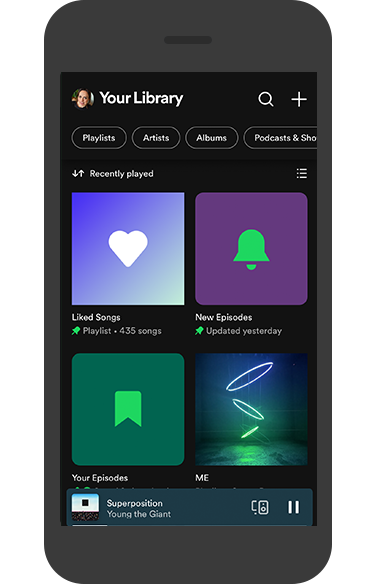
Starting off, I asked myself a few initial questions and gave the app a thorough look in order to set the challenge statement: let’s improve Spotify!
I started my research looking at who is/are the primary user(s)? What are their real needs? What problems are they facing? What are competitors doing? What are Fjord and Accenture telling about the technology trends and the next wave of digital change.
All these questions create the foundation to answer the most important question, which is: how can we improve Spotify and get it ready for the future.
Competitive Analysis
To get a better overview I found Hiro Mejia’s competitive analysis. He compared different streaming services based on their strengths and weaknesses to have an idea of how existing services affect the market.

Credits: Spotify Research by Hiro Mejia. Url: www.hiromejia.com/work/spotify
The Spotify Ecosystem
“The only way to solve the problem was to create a service that was better than piracy and at the same time compensates the music industry.” — Daniel Ek and Martin Lorentzon launched Spotify in 2008.
The Spotify ecosystem consist of the digital platform itself, artists, music labels and the users.

Name: Lenny Jones
Age: 43
Occupation: Music artist

Name: Scott Abrams
Age: 34
Occupation: Music label

Name: Makayla Katuta
Age: 19
Occupation: Spotify user

What is Spotify’s success?
Spotify is an ecosystem powered by network effects. This means the more people use it, the more additional value the product or service gains.
Spotify also has a wealth of listener data – more so than other competitors, since it’s been around longer – which the company can most likely use to monetize and enhance the platform in the future.
To simplify — The more users, the more playlists. The more playlists, the better the music discovery. Simultaneously, the more users on Spotify, the better it is for artists (increased streaming royalties and exposure). The more artists, the better for users (larger library, greater choice, better music discovery).
Also, Spotify is trying to improve its profitability by shifting toward higher-margin podcasts and reducing its dependence on expensive licensed music. Spotify’s big bet on podcasts also suggests it’s evolved into a social platform.
Brainstorm


How Now Wow Matrix
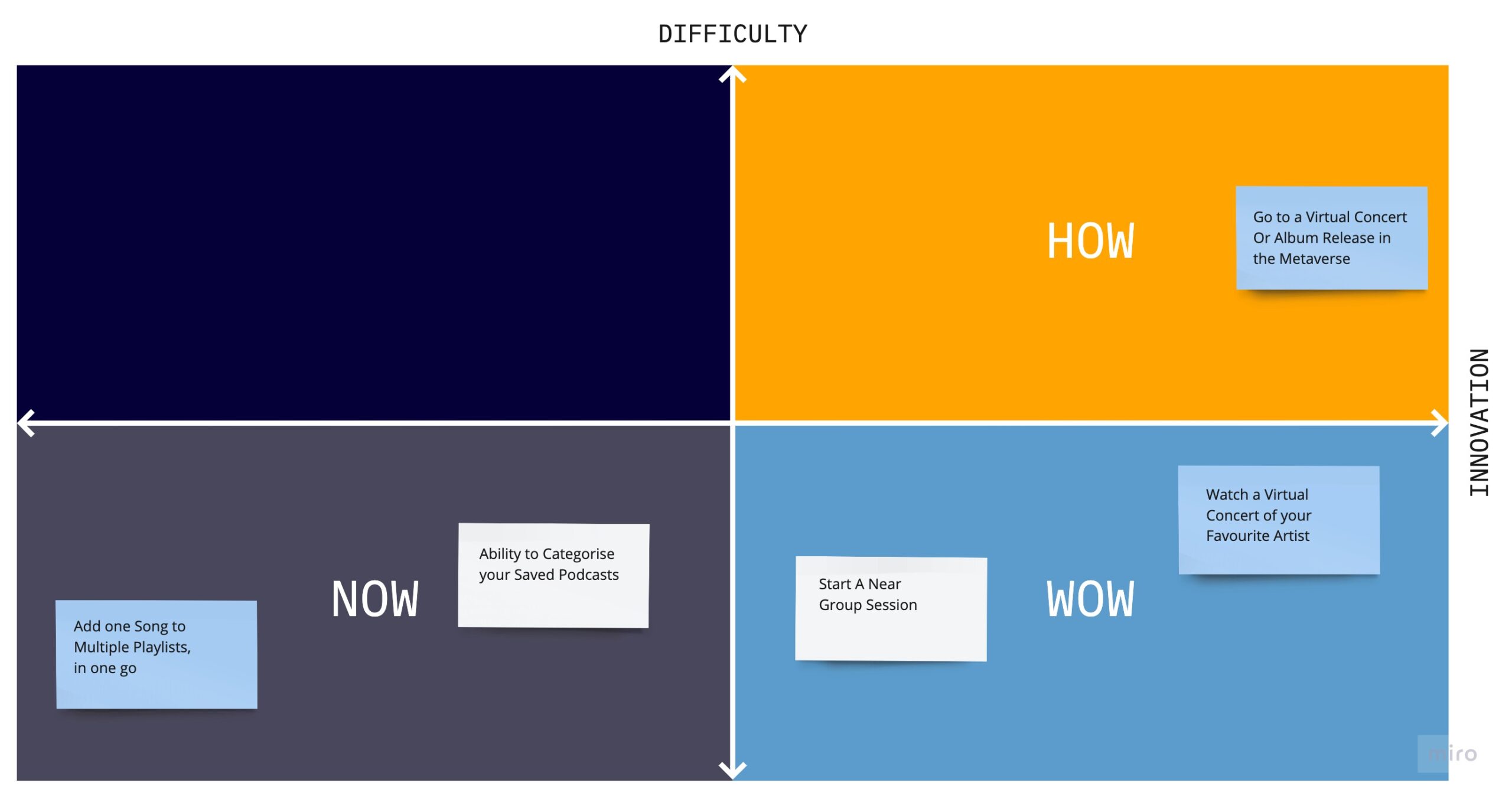
The How Now Wow matrix is an idea selection tool that helped me to plan ideas and organize my thoughts. The matrix categorizes ideas based on their originality and the ease of implementation.
I decided to go for:
- Add one Song to Multiple Playlists, in one go.
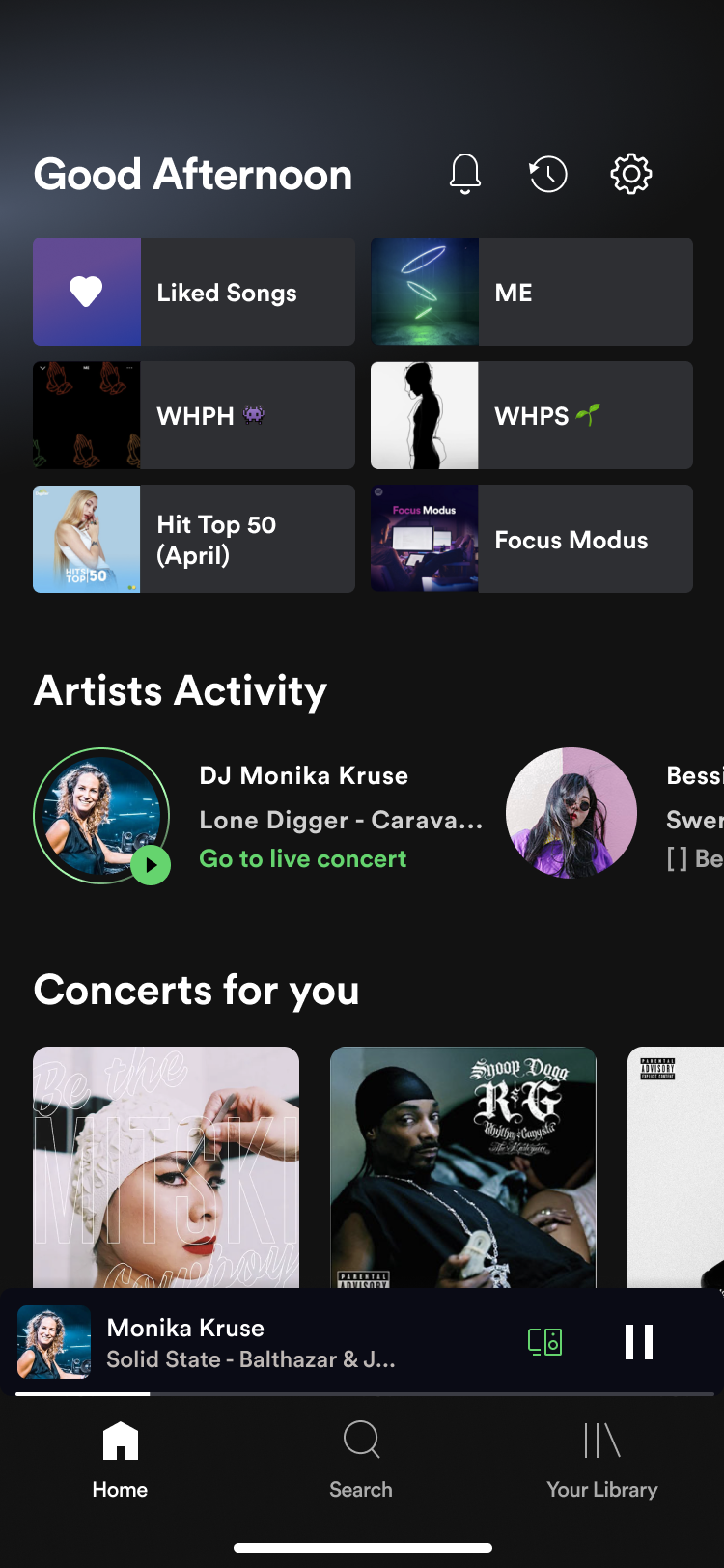
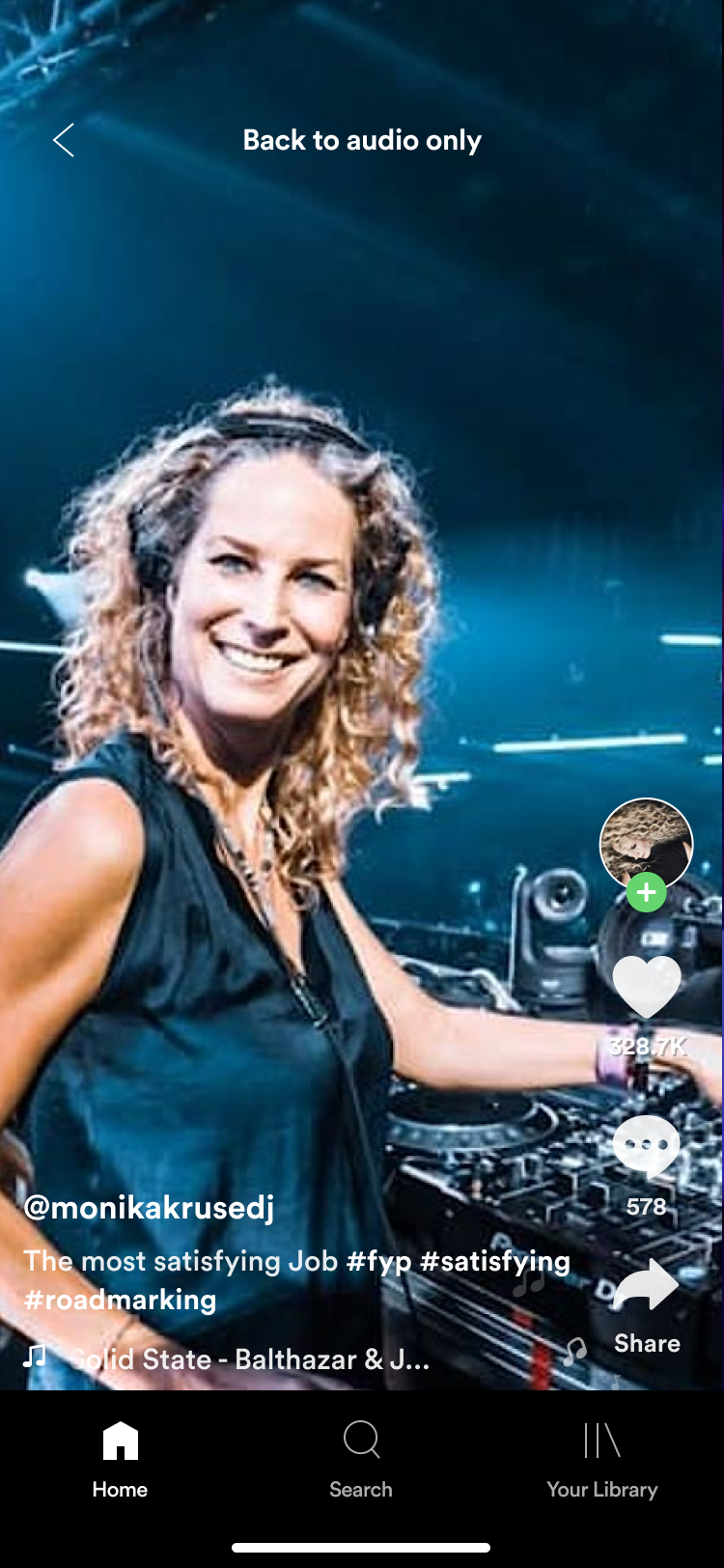
- Live Concert (which will become a virtual concert option once the Metaverse platform is ready).
Wireframing
After deciding to go for the ‘Add one Song to Multiple Playlists‘ as an easy to implement pain point, and before moving onto high fidelity wireframes and mocks, I wanted to get a feel for what the core of the app would look like when put in front of me. I created low-fidelity wireframe sketches within this user flow.

High-Fidelity Wireframes
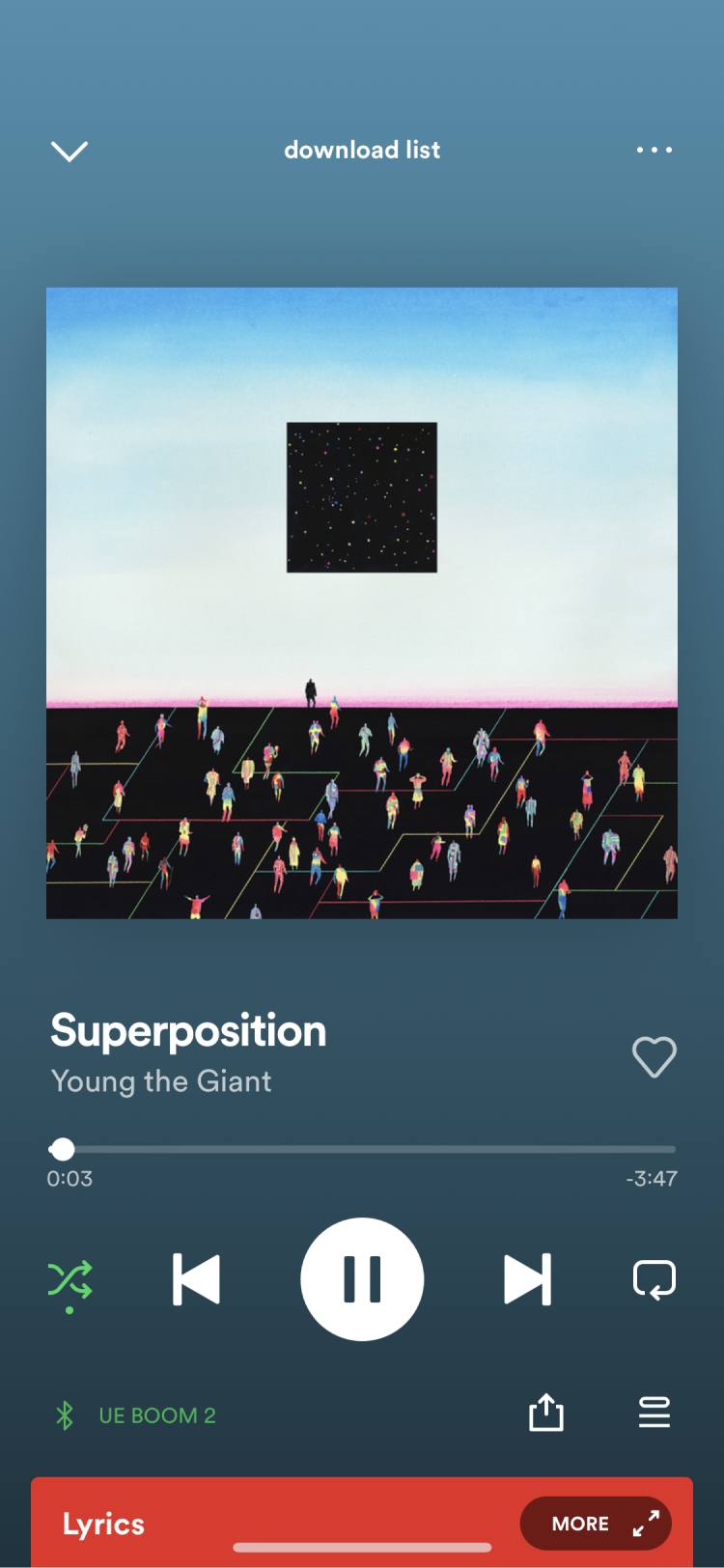
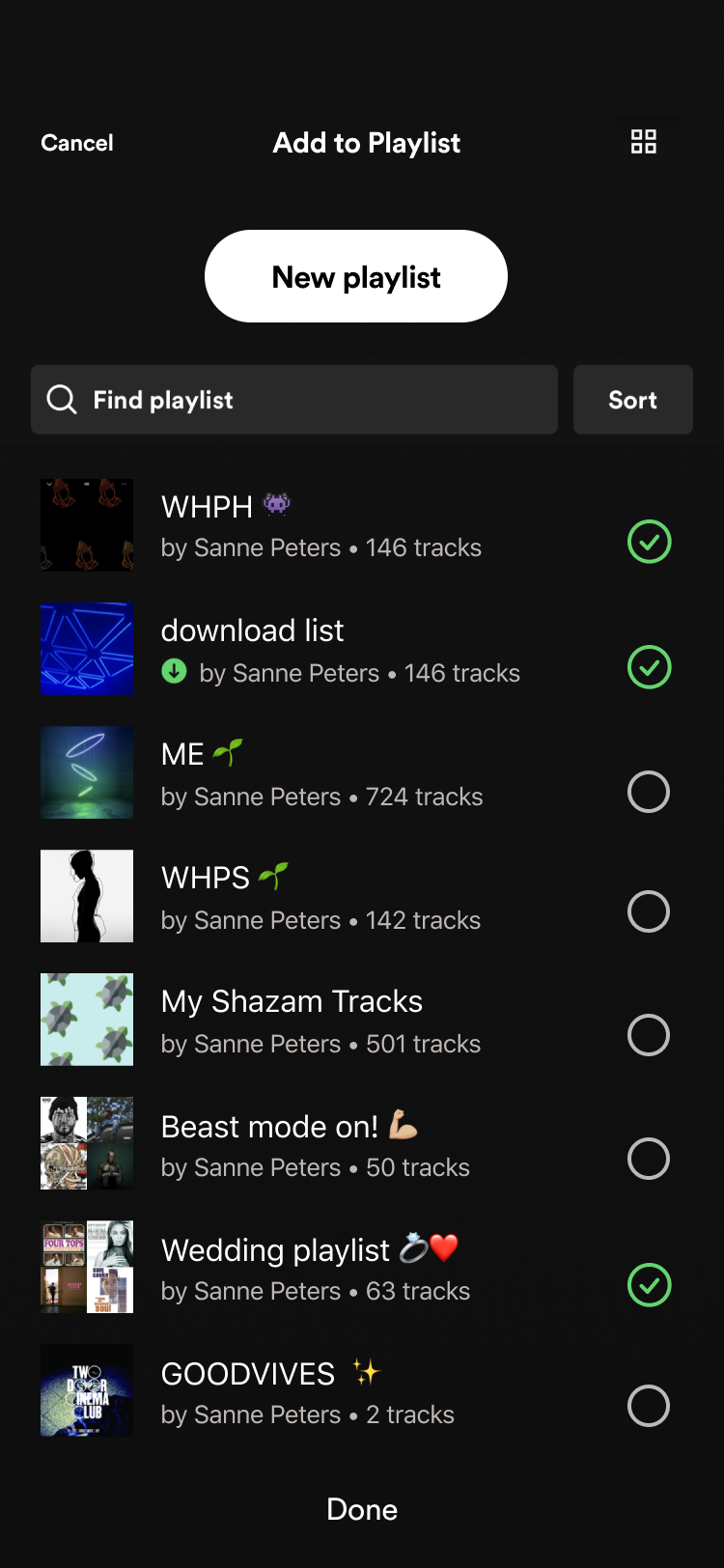
Add song to Multiple Playlists (pain point)
I then moved directly into creating high-fidelity wireframes since I was able to work with Spotify’s existing UI and I wanted to develop a prototype that would allow me to test users’ interactions with the new feature in a context as authentic as possible to the real experience of the app.


High-Fidelity Wireframes
Live concert (feature)
Moving onto the first steps of the ‘live concert’ feature, I didn’t create low-fidelity wireframes because it only requires one step to activate the live concert.

Fjord Trends 2022
“The metaverse is a new convergence of physical and digital worlds and embodies the next stage of how physical interacts with digital. It’s a place where people can meet and interact, and where digital assets — land, buildings, items, avatars and even names — can be created, bought and sold. This new system of place will shift culture and digital behavior expectations, and succeeding here will rely on brands’ understanding of their customers and how/if they exist in this new world.”
– Accenture Fjord Trends 2022 Full Report, page 31.
How will an audio streaming service finds its way in this reality is an interesting topic. But one thing is for sure and that is that there’s no reality possible without music, whether it be physical or a virtual reality.
Moodboard
I then focused on what can be a possibility for Spotify to consider when the Metaverse is ready for concerts. I started a moodboard to try to imagine what the product would look like.

High-Fidelity Wireframes
Future live concerts (future feature)
The ‘live concert in Metaverse’ feature is a concept. Let’s get businesses ready for what is coming.

Credits: Backgroundground image Melissa Askew Url: https://unsplash.com/@melissaaskew and hand images Facebook Meta https://about.facebook.com/
Takeaways
Being a music and tech enthusiast myself, working on Spotify was incredibly rewarding. I got to work more deeply with Figma, challenged myself in a full visual design experience and narrowed down my design process.

How nice of you to drop by! Let's get in touch and tell me how I can help you get some design related work off your plate.
MEET SANNE
NEED HELP?